Ingredients
Equipment
Method
- Prepare the Asparagus: Snap off the tough ends of the asparagus. Cut into 1-inch pieces.1 pound asparagus
- Sauté the Asparagus: Heat olive oil and butter in a large skillet over medium heat. Add the minced garlic and cook for about 30 seconds, until fragrant. Add the asparagus pieces. Cook for 5-7 minutes, until tender-crisp.1 tbsp olive oil, 2 tbsp butter, 2 cloves garlic, 1 pound asparagus
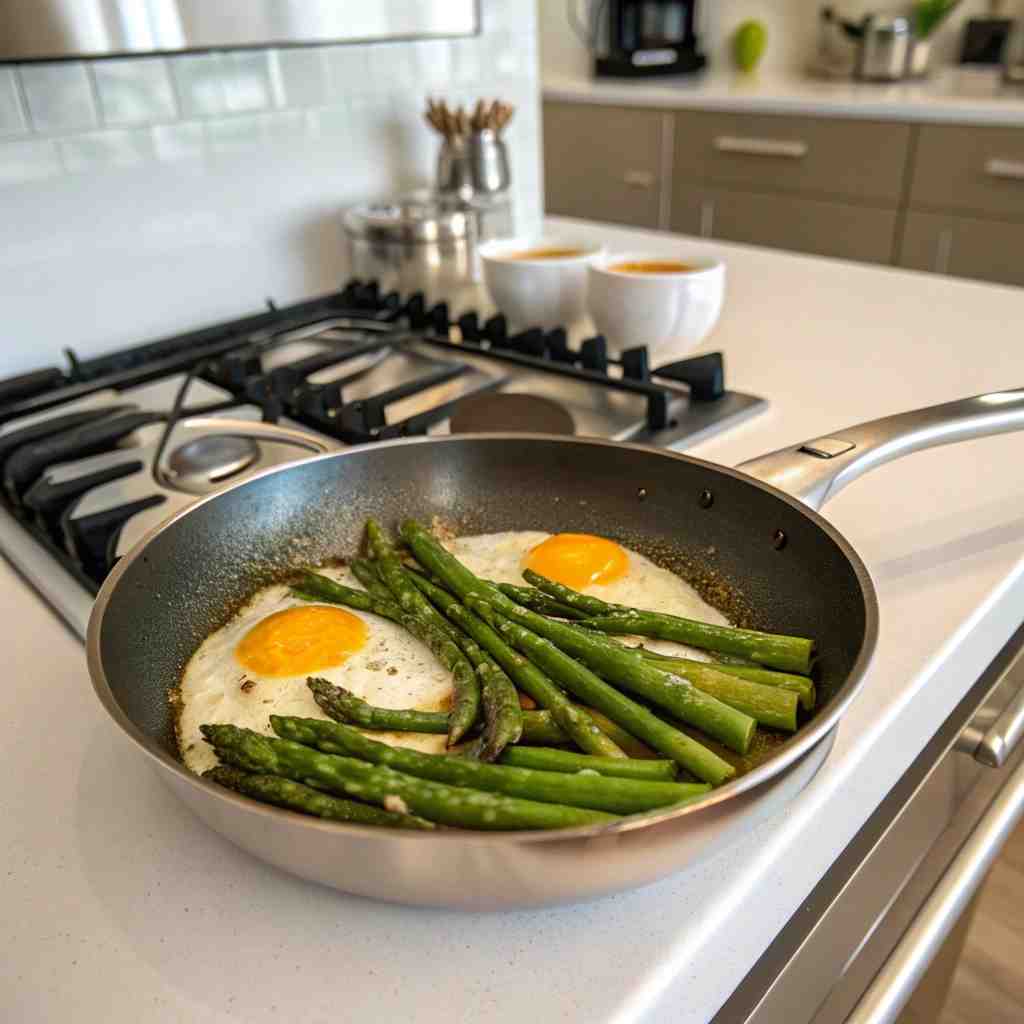
- Cook the Eggs: Create wells in the asparagus for the eggs. Gently crack each egg into a well.4 large eggs
- Cover and Cook: Cover the skillet and cook for 3-5 minutes, or until the egg whites are set but the yolks are still runny. If you prefer firmer yolks, cook longer.
- Finish: Remove from heat. Drizzle with heavy cream (optional). Sprinkle with Parmesan cheese, lemon zest, salt, pepper, and red pepper flakes (if using).2 tbsp heavy cream, 1/4 cup grated Parmesan cheese, salt and freshly ground black pepper, red pepper flakes
- Serve: Serve immediately with a squeeze of fresh lemon juice and toasted bread.1 lemon
Notes
For perfectly cooked Asparagus and Eggs, don't overcook the asparagus; it should still have a slight bite. When cooking the eggs, keep the heat at a medium-low setting to prevent them from becoming rubbery. The ideal result is a runny yolk that oozes out when you break it with a fork.